Product Overview
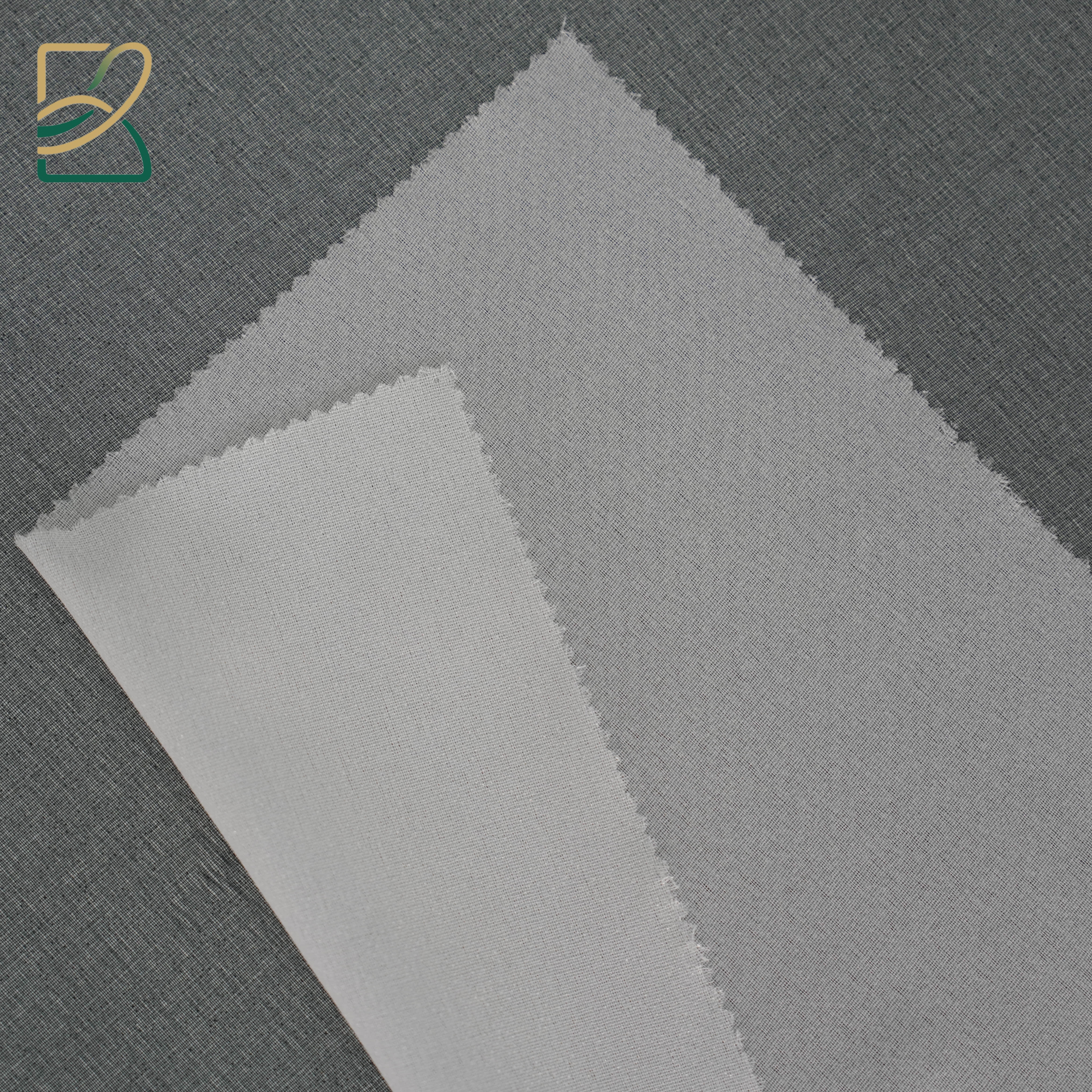
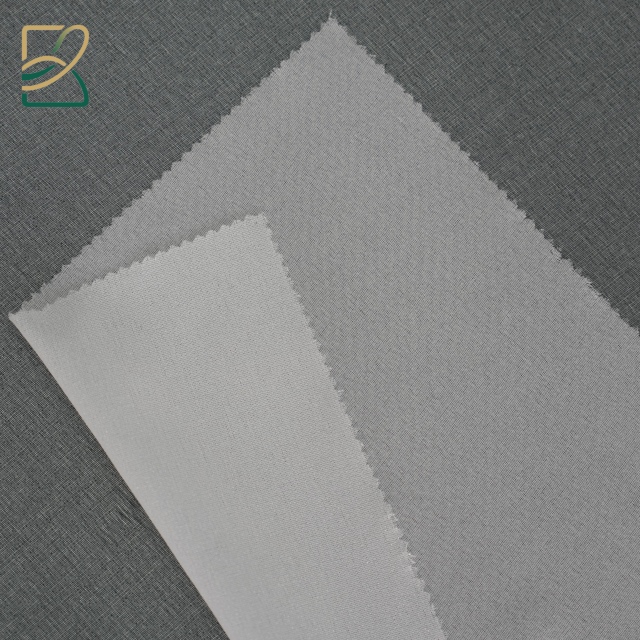
This is the lightest water jet interlining we weave: a 100% polyester base carrying a fine polyamide adhesive, with a finished weight that stays deliberately low. There is nothing heavy about it. On a soft coat shell or a light casual-jacket fabric, a conventional weight adds body the customer can feel through the cloth; this article adds support the wearer never notices. We supply it to garment factories, sample rooms and accessory converters who need collars to stand, cuffs to hold their edge and front panels to stop collapsing in wear, without the finished piece losing its drape. It cuts cleanly in layered work, fuses on standard press equipment and stays flat through washing and dry cleaning. Where a style calls for something else, we also supply other widths, and we make custom water jet interlining to your own grammage or roll width on request. One clarification that saves buyers a wasted enquiry: this is not a garment lining. It is fused to the inside of a shell to reinforce and stabilise the panel, which is a different job from a lining fabric that hangs free inside the garment.
Material, Structure and Performance Consistency
The base is a spunlace web: polyester fibres are laid into a uniform sheet and entangled with high-pressure water jets, with no chemical binder holding them together. That is where the softness comes from — the sheet flexes in every direction instead of resisting like a paper-backed product. Structure is what separates a water jet interlining from a chemically bonded web: no binder spine down the roll, just entangled fibre with a fine, matte surface that does not catch the light.
The polyamide coating is applied to one face, and it is what turns the web into a fusible interlining. It is a light coat on purpose: enough to build a reliable bond on a woven shell, not so much that the adhesive pushes into the face fabric or leaves a shadow at the edge. Because base and coat are designed together, the sheet activates evenly across the roll rather than grabbing hard in one area and weakly in another.
On the line, that evenness is the value. Fused panels stay dimensionally stable through repeated wash and dry-clean cycles — edges do not curl, the surface does not bubble, and the interlining does not separate from the shell — so the finished part behaves like one cloth rather than two layers, which is a result a garment lining cannot deliver on its own.
Lot to lot the article is made to the same recipe: same base weight, same coat weight, same standard width. For a buyer standardising one woven interlining across several jacket styles, that predictability is worth more than a marginally lower price per metre, because a change in hand-feel between deliveries shows up as rejects at the end of the line — in re-fused panels and a lower first-pass yield rather than in any single number on a spec sheet. As a stable backing for embroidery and appliqué, it helps hold fabric shape and prevents deformation during needlework and washing. The lightweight yet sturdy profile bonds lightweight to medium-weight fabrics and keeps dimensional stability after fusing. Consistent texture and smooth adhesion help precision embroidery machines run without fabric distortion, and the material works across both manual and automated embroidery lines to support productivity and reduce waste.
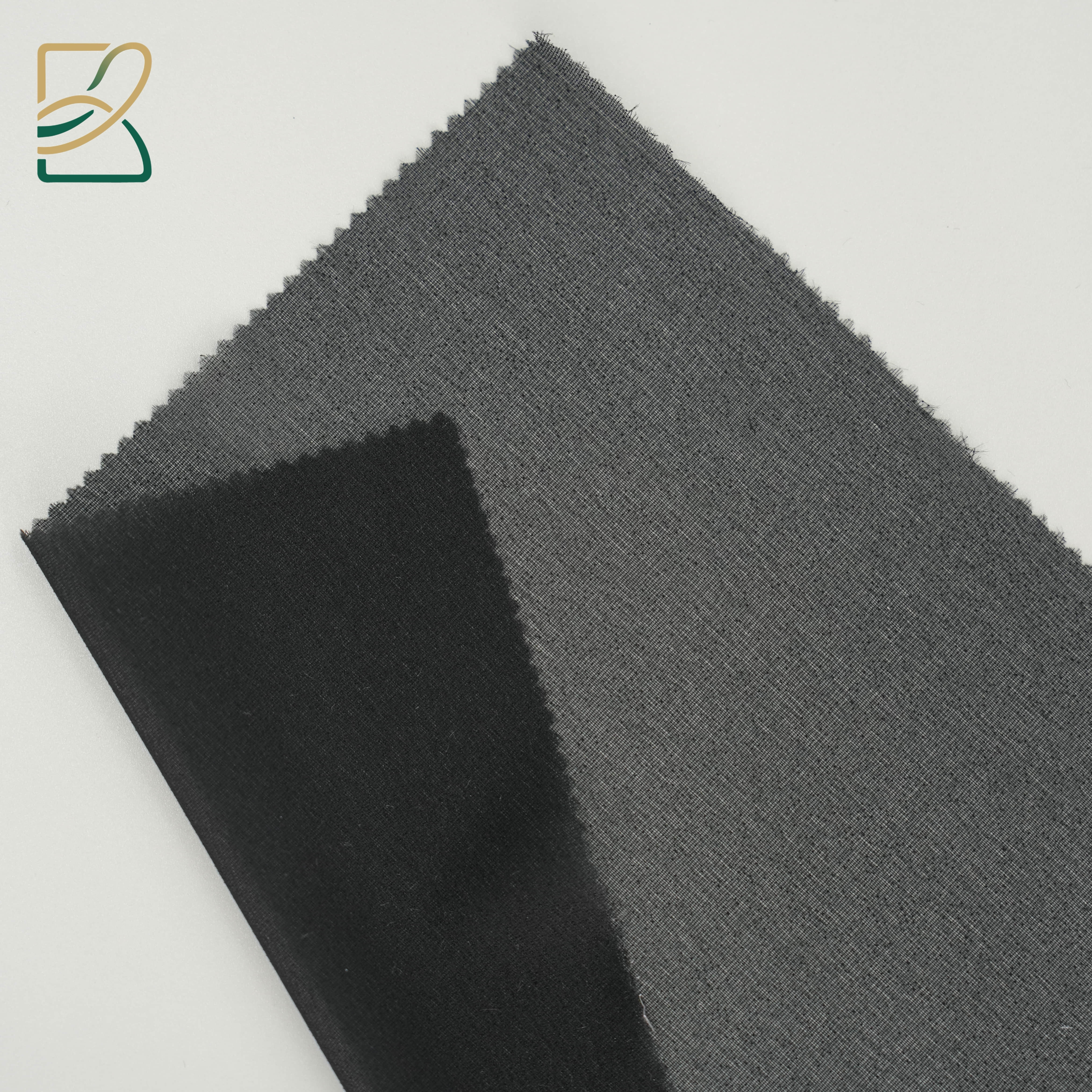
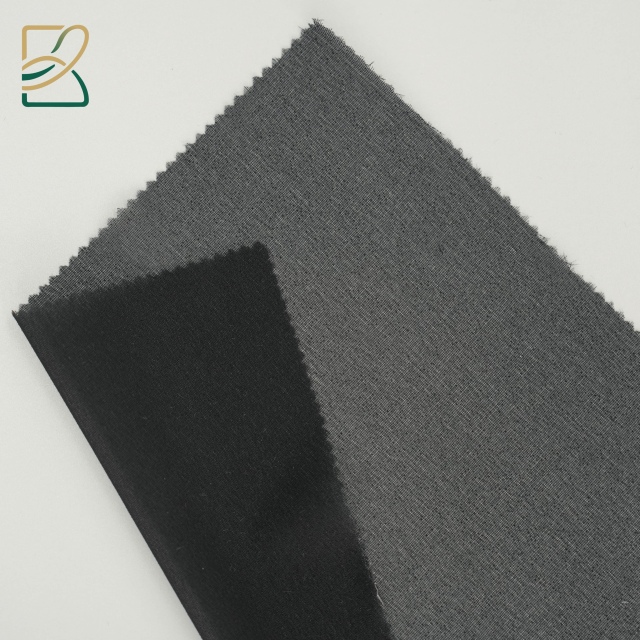
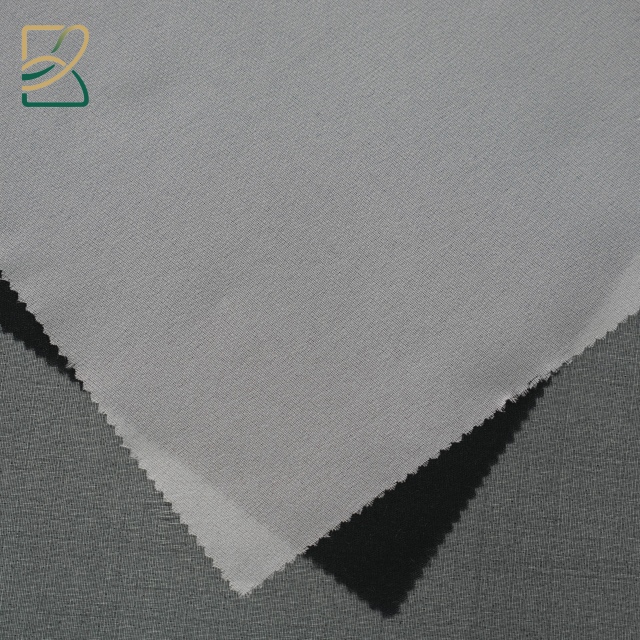
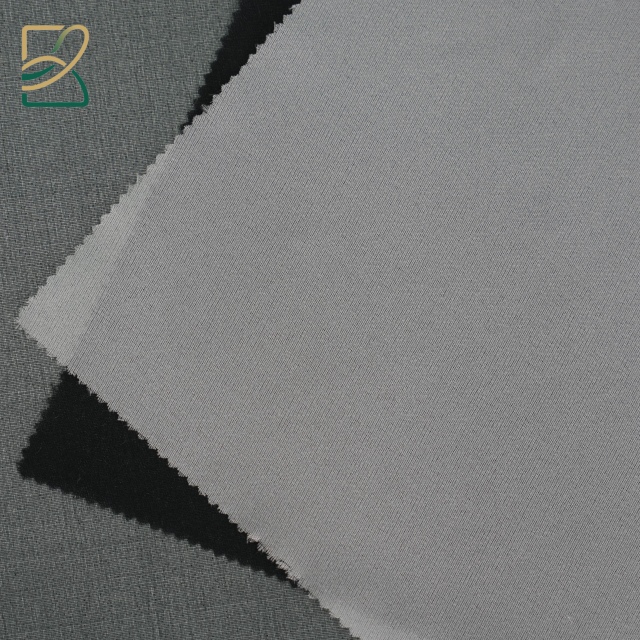
- A hand you can keep. At 14.5 gsm total the interlining sits under the shell without changing how the garment folds, which is exactly what soft wool blends and fluid synthetics need from a reinforcement. - A bond that survives the wash. The 4.5 gsm polyamide coat develops a reliable peel strength on fusing, and fused panels stay dimensionally stable through washing and dry cleaning — no bubbling, no lifting at the edge. - Thin enough not to read through. Light poplin, fine twill and chiffon do not telegraph the interlining, and the low coating weight means no glue strike-through on the face side. - Low-temperature activation. The coat flows at the lower end of the press range, which shortens the fusing cycle and puts less heat into shells that mark easily. - Two colours for production control. Off-white under pale shells and dyed black under dark ones keep a fused panel looking deliberate, and the contrast makes a missed spot or a turned edge obvious at inspection. - One plant, one standard. Running the whole water jet interlining factory process in house — base web, coating, slitting and packing — is what keeps roll-to-roll behaviour close enough for a repeat programme.
Fusing and Embroidery Support
- Test on your own shell first. Fuse a small square to an offcut at the setting your operator normally uses for a polyester and polyamide fusible interlining, then let it cool completely before pulling at the corner.
- Place the coated side to the wrong side of the shell. A press cloth protects the face fabric on top; the adhesive face is the one that has to touch the interlining side of the panel.
- Start low and raise only if you need to. This coating activates at the lower end of the press range, so begin there and move up only when the corner peel shows an incomplete bond.
- Work in one pass. Move the press steadily across the panel so the whole area gets the same dwell time; a second pass over a partly cooled panel is what causes patchy bonding.
- Let it cool flat. The bond develops as the panel cools, so stack fused parts flat rather than folding them warm.
- Wash one fused swatch before bulk. Run a fused offcut through your normal wash or dry-clean cycle; if the edge still sits flat with no bubbling, release the order.
- For embroidery, fuse first. On decorated panels this article works as a stable backing under the stitch area, keeping the fabric from distorting as the needle works and holding its shape afterwards. On dense designs, add a tear-away or cut-away backing over it.
Apparel Stability and Reinforcement
- Collars. A fused collar stand in this weight holds its line through a day's wear without the boardy feel a heavier article gives a soft coat collar, and the collar tip stays soft. - Cuffs and plackets. Cuffs keep a clean folded edge and plackets stay flat enough to button without the interlining showing along the fold. - Front panels and facings. A light front holds its shape and recovers after pressing instead of sagging between the button and the shoulder. - Reinforcement, not a garment lining. Because the material is fused to the shell, it changes how the panel itself behaves rather than hanging behind it. - Mass-production fusibility. Consistent activation across the roll lets an automated line run one setting all shift instead of adjusting for the next roll — behaviour that matters just as much on a custom water jet interlining run as on a standard order.
Use Scenarios
- Lightweight wool and wool-blend coats. Collar, lapel edge and front facing, where the garment has to hold a line but still feel soft on the shoulder.
- Casual jackets and soft blousons. Body panels and pocket flaps that need a little structure without the jacket turning into a stiff shell.
- Fashion outerwear with fluid drape. Styles where the fabric is the selling point and a visible interlining line would ruin the look.
- Sheer and semi-sheer styles. Chiffon and similar fine fabrics that a standard weight would print through or stiffen out of character.
- Sample rooms and pilot runs. A low-commitment way to check a new shell before the style is released to bulk, with the trial swatch drawn from the water jet interlining factory that will supply the bulk order.
- Converters and stockists. A woven interlining that behaves the same from roll to roll is easier to resell than one whose hand changes between deliveries.
Industrial Apparel and Production Deployment
Workwear and industrial garment programmes use this article where the shell is light but the garment still has to survive a working day: collar stands, cuffs, pocket mouths and the front edge of jackets that get pulled, leaned on and washed often. The fused parts keep their shape under that handling without adding weight the wearer notices, which is the balance industrial outerwear usually struggles to find. It also suits factories running several styles off one interlining. Downstream, the same material doubles as a backing for embroidery and as a bonding layer where a stretch panel needs an elastic interlining underneath. We supply it as a water jet interlining factory rather than through a converter chain: base production, coating and slitting happen in one plant, so a programme that starts in the sample room can move to container volume without changing source. For a production planner the gain is throughput — fewer panels re-fused because the bond did not take, less time spent resetting the press for a new roll, and less waste out of a standard roll.
Specifications
| Article | 1054 |
| Composition | 100%Poly |
| Construction | Water Jet Interlining |
| Total weight | 14.5 gsm |
| Base fabric weight | 10 |
| Coating material | 100% PA |
| Glue weight | 4.5 gsm |
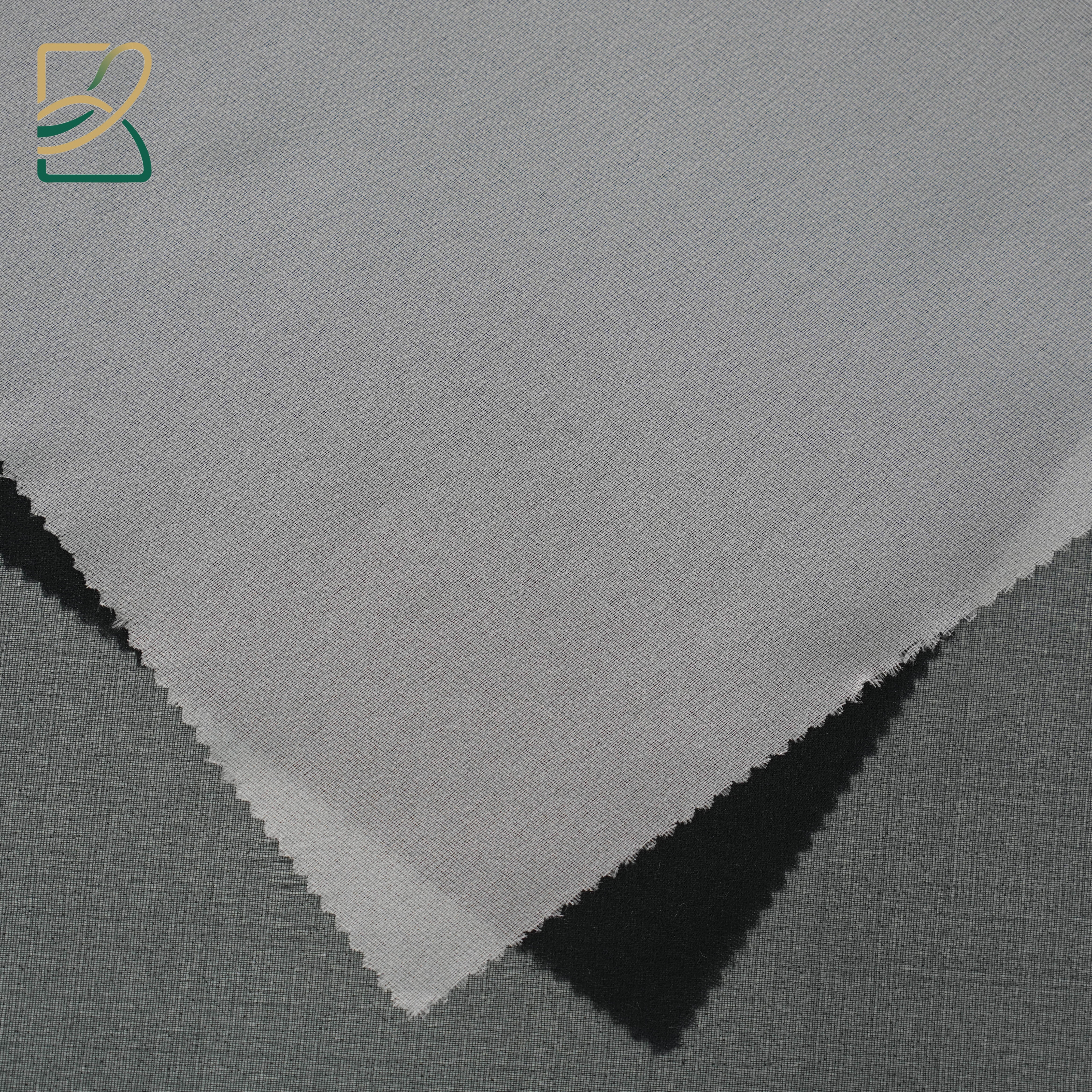
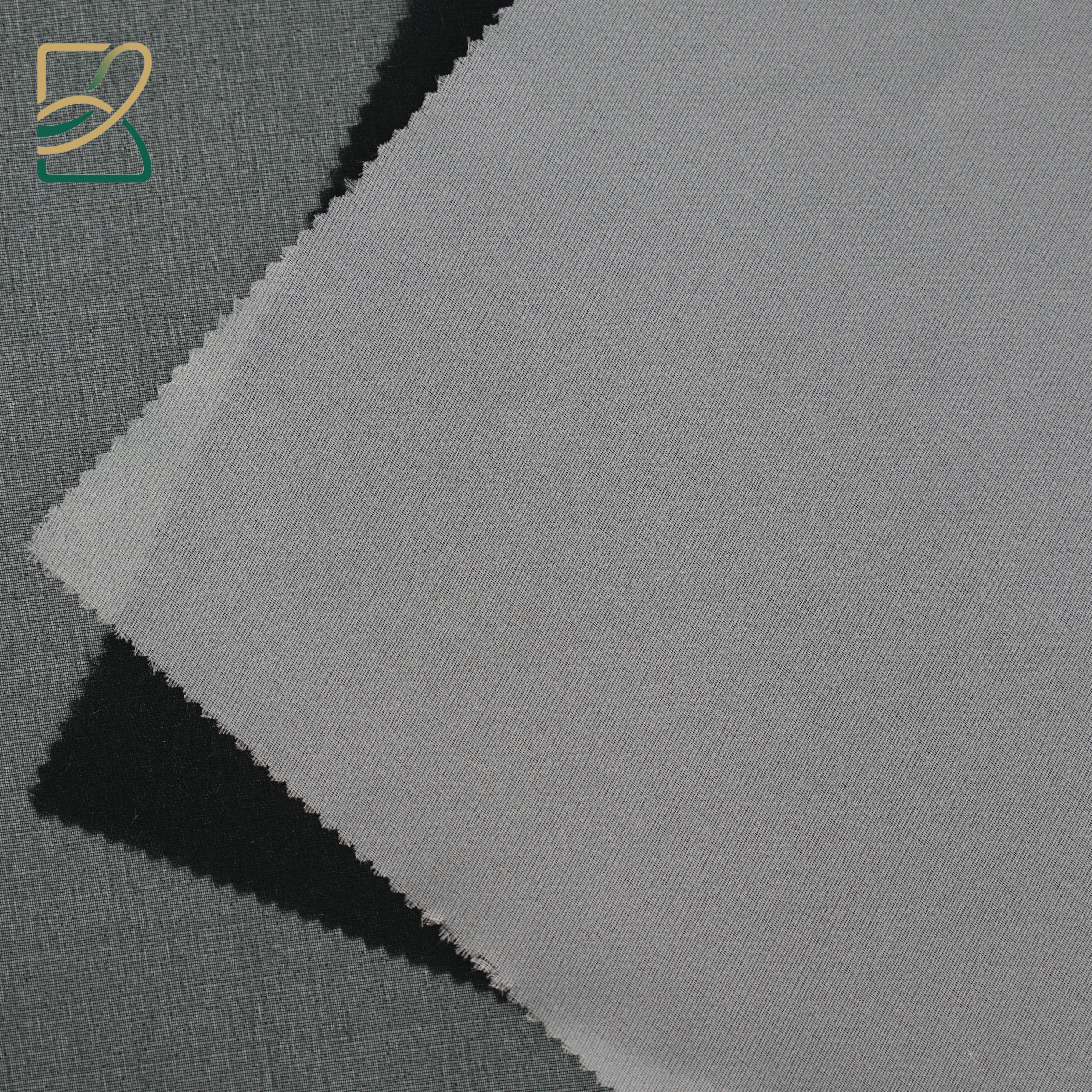
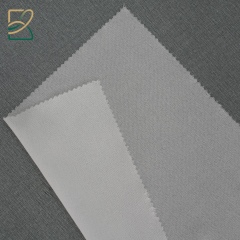
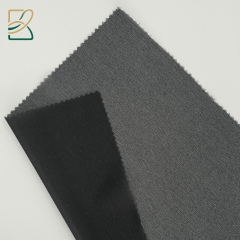
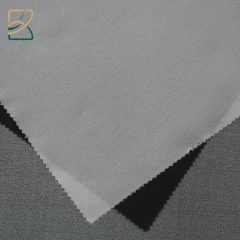
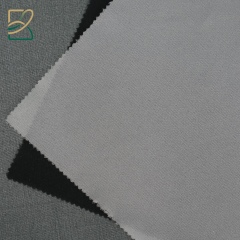
| Colour | Off-white / dyed black |
| Width | 60"/150CM |
| Available widths | 1.0 m, 1.12 m, 1.22 m, 1.5 m, 1.65 m and 1.8 m |
| Hand-feel | Soft, ultra-thin, low bulk |
| Care | Washable and dry-cleanable |
| Fusing | Low-temperature activation, non-strike-through |
Ordering and Delivery
- Match the article to the shell. Confirm the colour (off-white or dyed black), the width, and — if you are stepping down from a heavier interlining — that the article is light enough for the face fabric you are running.
- Fix the width. The standard roll and the alternative widths are listed in the specifications; if you need a grammage or width outside that range, your sales contact can confirm what is possible against your specification.
- Ask about samples and a fused trial. Your sales contact can confirm sample availability and the time needed for a fused swatch on your own shell before the order is placed.
- Order in container quantities. Stock available; shipped by the container, so a repeat programme can be released without waiting for a fresh production run.
- Confirm packing and labelling. Roll length, core, bagging and shipping marks are agreed before release — tell us what your warehouse needs to receive.
- Confirm the shipping schedule and documents. Your sales contact will confirm departure schedules, the documents your customs broker needs and the tracking for each shipment.
Scale & Supply Capability
We are a manufacturer rather than a trading company: production, quality control and stock sit under one roof, and we supply buyers worldwide — mostly converters, garment producers and trade partners who resell or specify our interlining into their own programmes. Fast-moving articles are kept in stock, so container-level repeat orders can be released without waiting on a fresh production run. Custom grammage, width and private-label packing are available on request, and we will help you match the right article to your shell fabric before you commit to bulk.
FAQ
What materials are used in this water jet interlining?
A 100% polyester base web, entangled with water jets, coated with 100% polyamide adhesive at 4.5 gsm. Nothing else goes into it — no binder resin in the web and no blended glue. The base weighs 10 gsm and the finished article 14.5 gsm.
Can I request custom widths or grammages?
Yes. The standard roll and the alternative widths are listed in the specifications. Anything outside that range, or a grammage other than the standard total weight, is produced as custom water jet interlining against your specification — send your target weight, width and colour to your sales contact and we will confirm what is possible for the quantity you need.
How do I apply it to my garment panels?
Fuse the coated side to the wrong side of the shell using a heat press or a continuous fusing machine set for a polyester and polyamide fusible interlining. This coat activates at low temperature, so start at the lower end of your usual range, let the panel cool flat, then check the corner peel. A trial on an offcut of your own shell is the only reliable way to fix the setting for your fabric.
Will it make a light jacket feel stiff?
No. At 14.5 gsm total — 10 gsm base plus 4.5 gsm glue — it is thin enough for chiffon and fine poplin, and the fused panel keeps the drape of the shell. If you need real body in a structured coat front, this is the wrong article and you should step up the range instead.
How does it behave after washing and dry cleaning?
It is washable and dry-cleanable. Fused panels hold their dimensional stability through repeated cycles without bubbling or delaminating at the edge, and shrinkage is low enough that the panel does not pull away from the shell.
Which colour should I order for a pale shell?
Off-white for pale, natural and undyed shells; dyed black for dark and black shells, where a white interlining would show a grey edge at a collar or cuff opening. Check the shade against your own face fabric before a bulk order — pale shells vary more than most buyers expect.
Where does this sit among the heavier articles in the range?
It is the lightest article we supply. The steps above it — 18.5 gsm, 22.5 gsm and upwards — keep the same polyamide coating but add base-fabric weight, which gives more body to the fused panel. Choose by the shell: light and soft here, heavier only when the garment has to hold a defined shape.