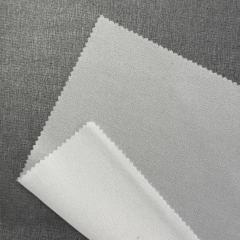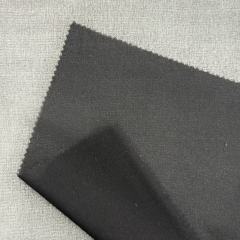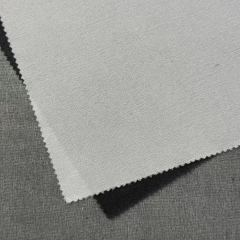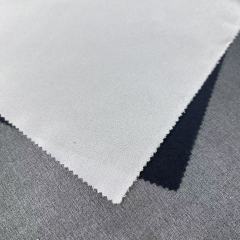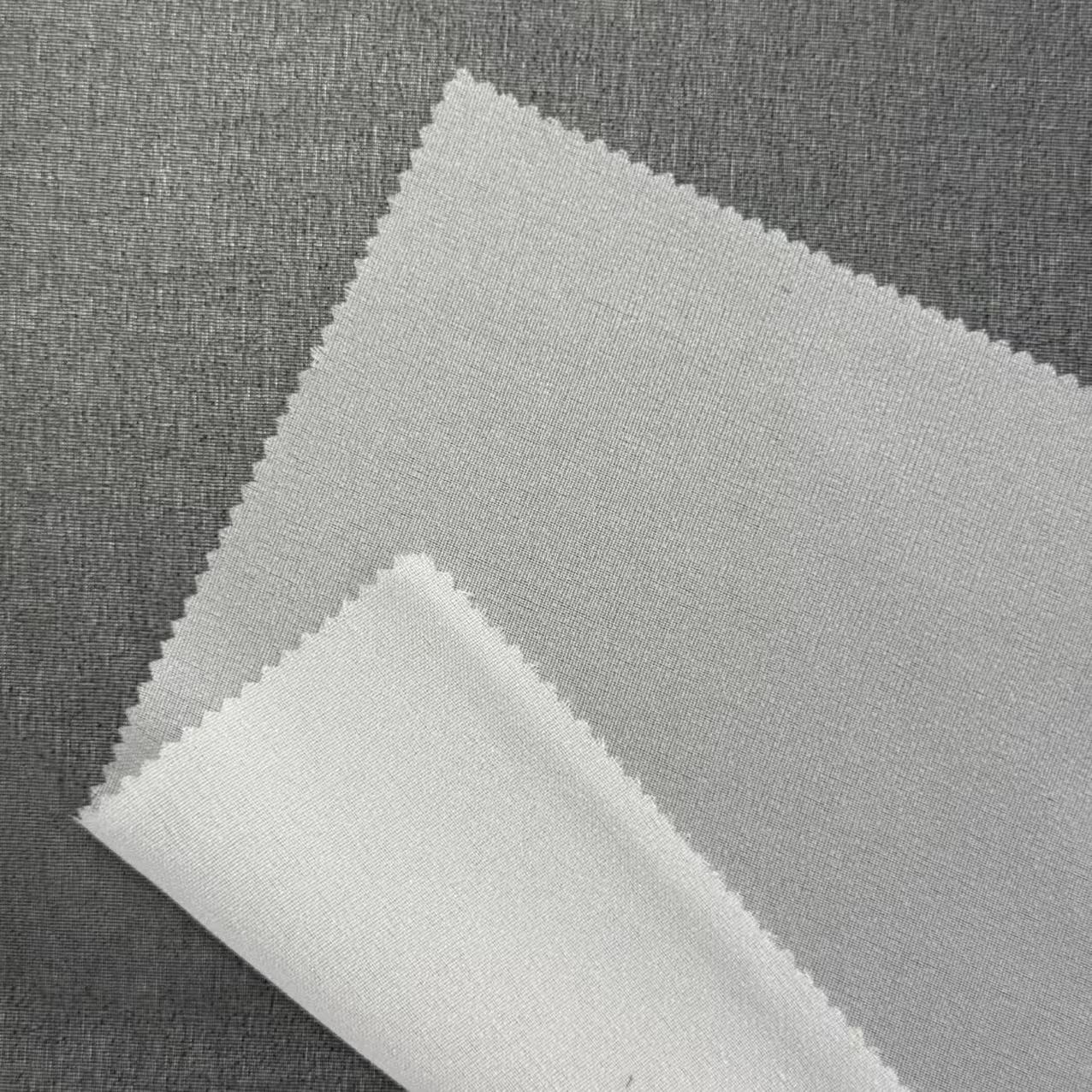
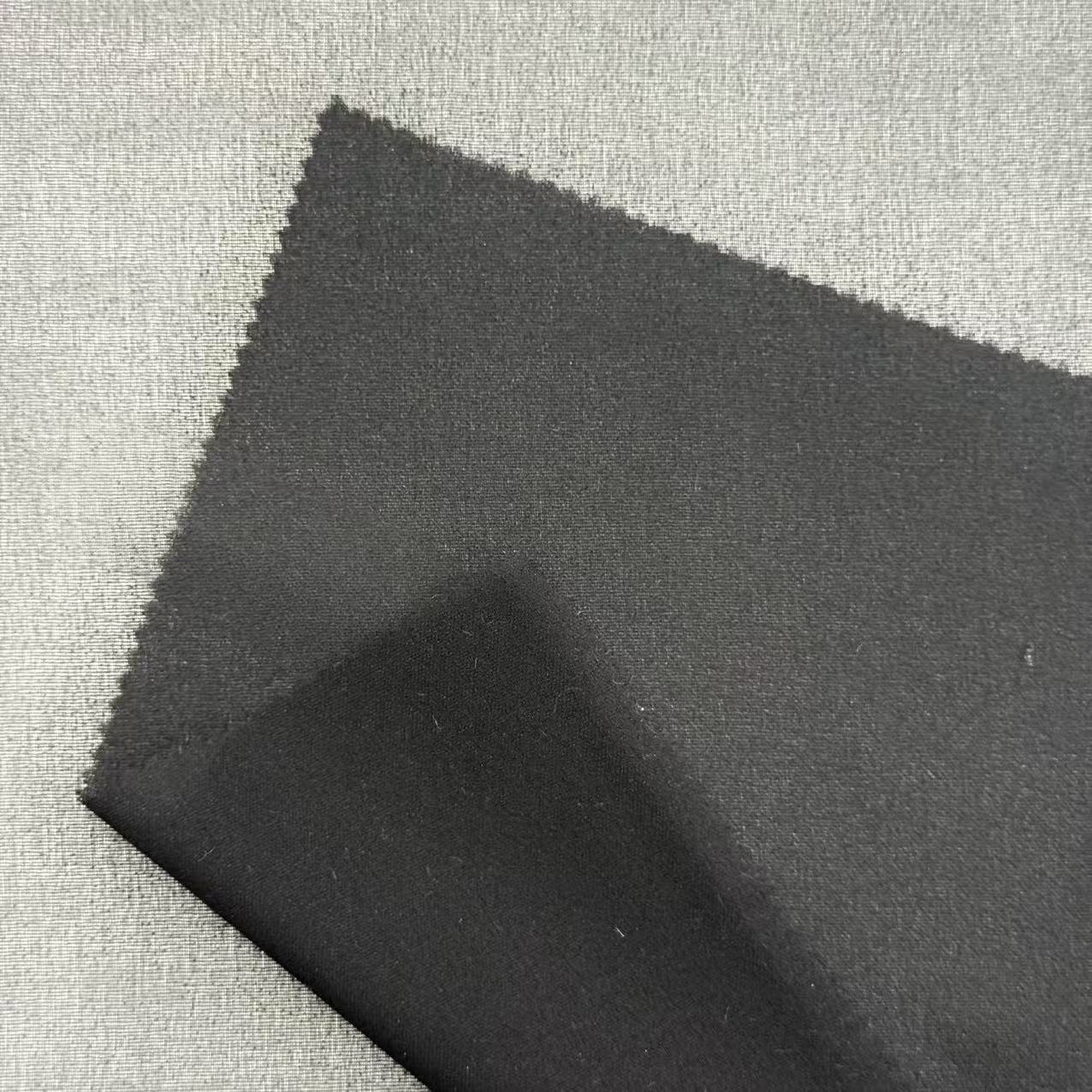
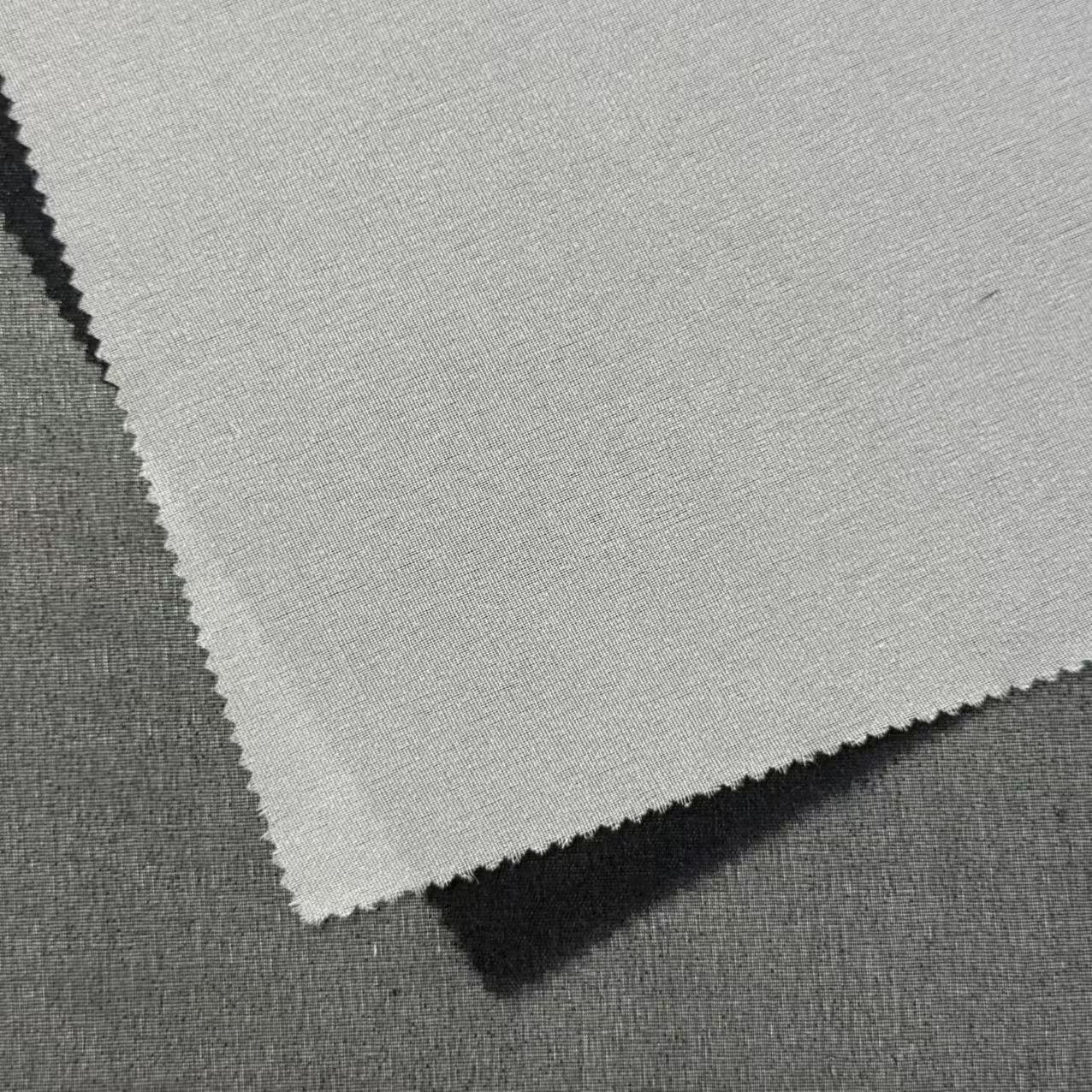
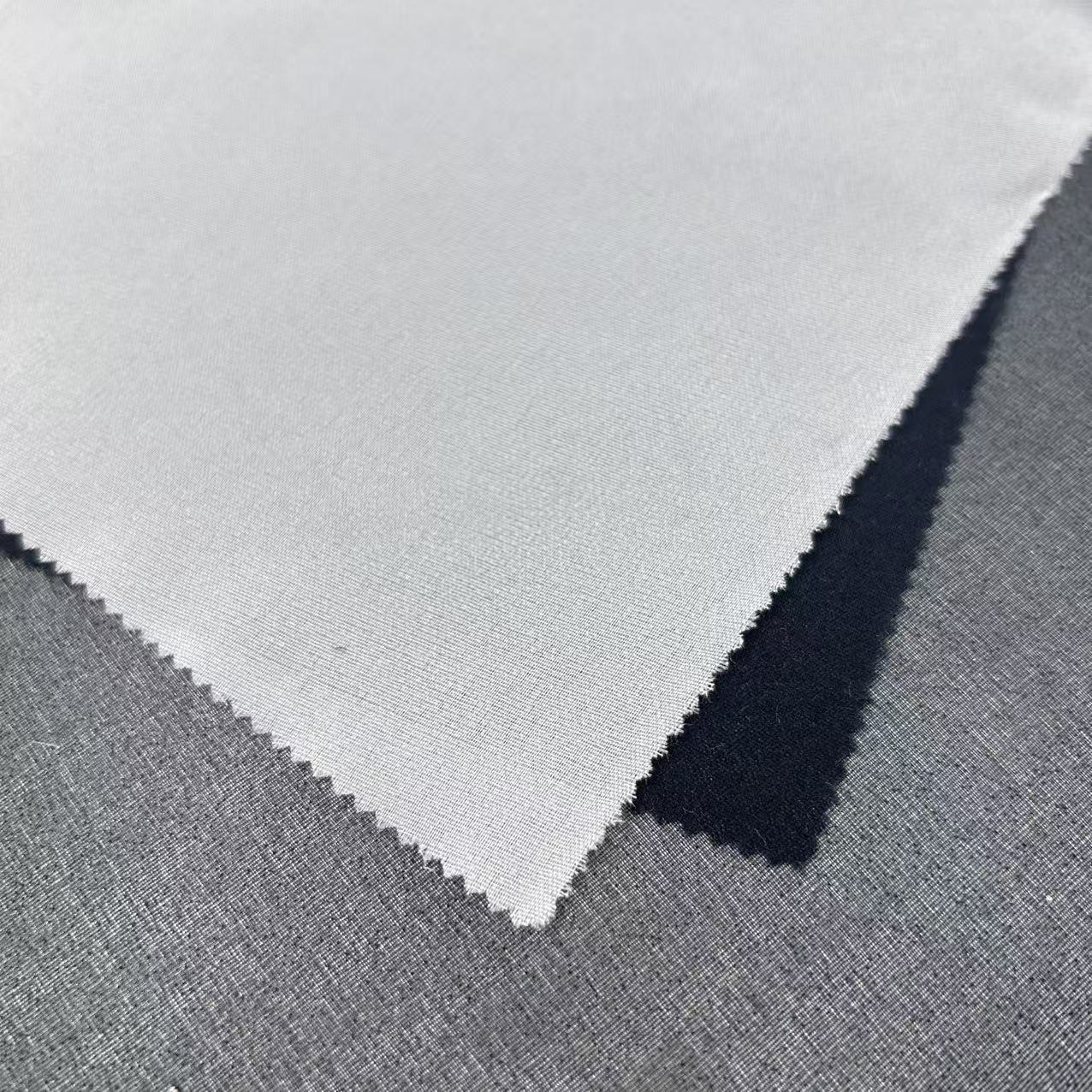
water jet interlining manufactured for durable fabric support, available in off-white and dyed black. Trust a reliable water jet interlining supplier delivering lightweight, strong bonding solutions.
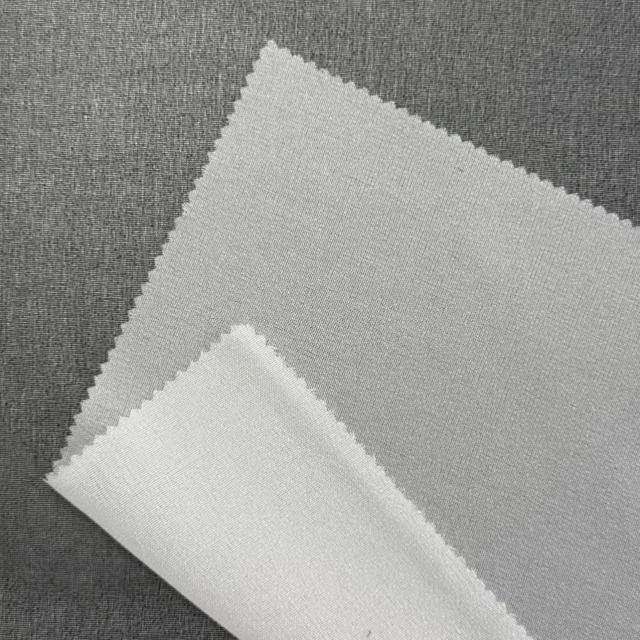
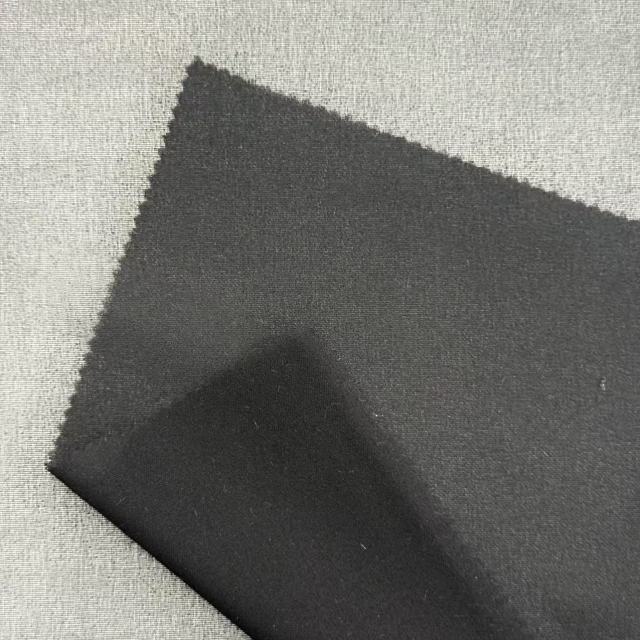
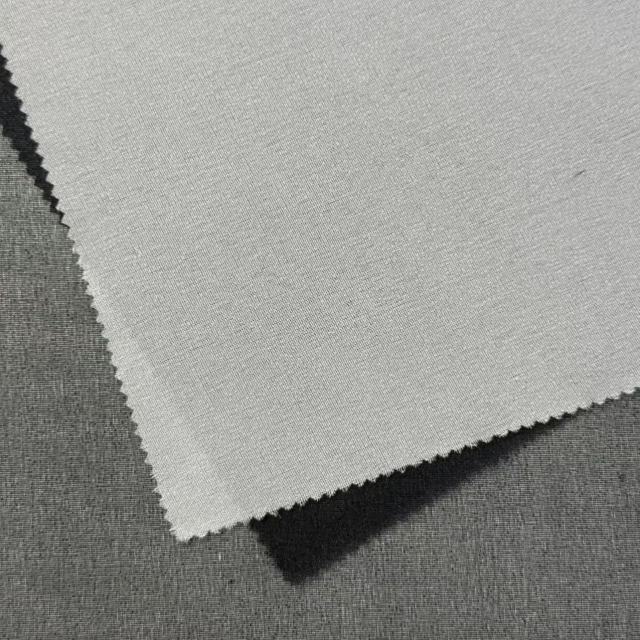
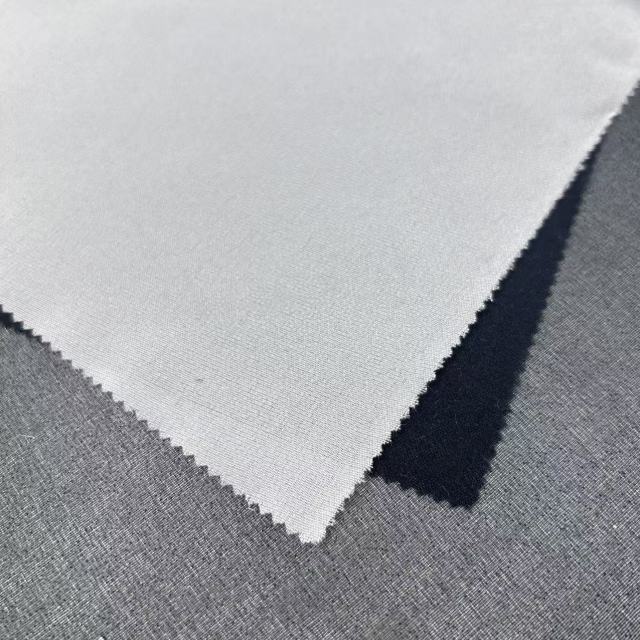
That low add-on is deliberate. It gives a shell just enough body to hold a collar stand, a clean cuff edge or a flat front panel without changing how the cloth feels in the hand or how it drapes on the body. Garment producers, technical designers and interlining traders reach for this weight when a heavier article would show a ridge through the face fabric or stiffen a fine woven. It is fused to the wrong side of the shell before assembly and then handled like any other component in the lay. Neutral off-white and dyed black cover both ends of the shade range, so a white shirting and a dark outerwear shell can be backed from the same article. If you are moving a programme down from a heavier interlining, this is the weight to trial first. The design balances rigidity and flexibility so it can adapt to different fabric types and production line speeds. A 100% polyester base with a 100% polyamide glue coating supports reliable fusion and resistance to delamination, while the uniform sheet construction allows precise cutting and consistent heat activation during pressing. The standard width is suited to wide-format automated systems, helping reduce waste and improve yield. Having off-white and dyed black options also aids visual quality control, making placement defects easier to spot during application. As an embroidery and appliqué backing, it helps maintain fabric shape and prevent deformation during needlework and washing. Its lightweight yet sturdy profile is suited to bonding lightweight to medium-weight fabrics and supports dimensional stability after fusion. Consistent texture and smooth adhesion help precision embroidery machines run without fabric distortion, and the backing fits both manual and automated embroidery lines while helping reduce material waste. - Minimal added weight: the interlining supports without stiffening, so fine wovens keep their drape and the collar or cuff does not feel boardy against the neck and wrist. - A clean bond rather than a heavy one: the polyamide adhesive holds the fused area flat through cutting, sewing and pressing, and there is little excess adhesive to bleed through a light face fabric. - Two shades for two ends of the range: off-white disappears under light shells, dyed black under dark ones, and the contrast between them makes a twisted or misplaced piece easy to spot on the fusing line. - Uniform across the full width: the sheet has consistent thickness and glue distribution edge to edge, which is what lets a wide-format spreader or automated cutter treat it like any other lay component. - Wider than most markers need: the roll covers most panels without joins, keeping offcuts down on styles with large fronts and backs. - Predictable hand: because the base and the coating are fixed at our water jet interlining factory, a designer who approves one fused panel knows what the next one will feel like.
The base is a 100% polyester cloth built by water jet construction, which produces a flat, stable sheet rather than a loose web. On top sits 4.5 gsm of 100% polyamide adhesive — a small addition, but a deliberate one. Polyamide bonds at fusing temperatures that lightweight shell fabrics can take, and at this pick-up it grips without the glue striking through to the face of a fine shirting or voile. Holding the adhesive at 4.5 gsm is what preserves breathability: air still moves through the fused area, so a backed collar or placket does not become a sealed patch that traps heat against the wearer. The same balance is why the bond resists delamination — the adhesive is anchored into the base cloth rather than sitting on it as a heavy film that can lift at the edges after washing. This is a fusible interlining, not a garment lining. It fuses to the wrong side of the shell to give that shell shape; the garment lining is the separate layer sewn in afterwards that covers the inside and sits against the body. They are specified separately, and using one in place of the other changes how the finished garment hangs.
Handling is where a light interlining earns its place on the line. The sheet is uniform in thickness and glue distribution across the full width, so a straight knife or an automated cutter produces clean component edges without wandering or frayed corners, and the cut pieces stack flat for bundling.
In fusing, the polyamide adhesive activates evenly because the coat weight does not vary across the roll. Dwell time can stay short, which matters on a light shell running through a continuous press: the fabric spends less time under heat and comes out flat rather than glazed or rippled. Set the press by the shell first and the fusible interlining second — the settings that work on a cotton poplin are not the settings for a brushed or coated outerwear fabric.
Before a bulk run, fuse a full-size panel from your own production fabric and check three things: bond strength at the edges and corners, whether any adhesive shows through to the face, and how the panel sits after cooling and one wash. If the panel cups or the shell ripples, adjust pressure and temperature before you question the article — a light interlining is far more sensitive to press settings than to anything in the roll.
On cotton and poly-cotton shirting it firms a collar stand and a cuff without the fused area feeling different from the rest of the shirt. On blouses, dresses and soft woven tops it stabilises a placket, a neckline facing or a pocket flap so the piece keeps its line through a day of wear. On lightweight wool and blended jackets it supports a front panel edge and a welt opening, where a heavier article would leave a visible ridge through the cloth. Uniform programmes use it the same way — shirts, light work jackets and service wear whose fused parts must stay crisp through a shift without making the garment uncomfortable. Soft tailoring is the other natural fit. The shell is fused first, the garment lining goes in afterwards, and the finished jacket keeps a clean inside and a controlled outside because each layer is doing its own job. Where it is not the right choice: a heavy wool coat front, a structured denim waistband, or any shell that genuinely needs body. Those call for a heavier article from the same range. Send us the shell weight and the part you are reinforcing and we will tell you whether this weight, a heavier article or a custom water jet interlining is the right place to start.
As a backing for embroidery and appliqué, the job is to hold the fabric still while the needle works and then disappear into the finished piece. The water jet construction gives a flat, stable surface with no thick spots for the needle to deflect against, and the 4.5 gsm adhesive bonds the backing to the shell evenly rather than in patches.
On lightweight and medium-weight wovens this stops the deformation you get when a dense stitch count pulls against unsupported cloth: the design stays true to the artwork, outlines stay sharp, and the area around the embroidery does not pucker or cup after washing.
Fuse before you hoop, not after. The backing goes on the wrong side of the panel, is pressed flat and allowed to cool, and only then does the piece go to the machine — single head or multi-head. Because the interlining is light, even a fairly dense design does not end up standing proud of the garment, which is the usual complaint when a heavy backing is used on a fine fabric. On appliqué work the same property keeps the silhouette clean where the shape is stitched down.
| Property | Value |
|---|---|
| Article | 1054 |
| Composition | 100%Poly |
| Construction | Water Jet Interlining |
| Total weight | 14.5 gsm |
| Base fabric weight | 10 |
| Coating material | 100% PA |
| Glue weight | 4.5 |
| Colour | Off-white / dyed black |
| Width | 60''/150CM |
| Weight position | Lightest article in the water jet range |
| Coating side | Single face, glue side fused to the wrong side of the shell |
| Fabric pairing | Lightweight wovens, fine shirting, voile, light outerwear shells |
| Typical components | Collar stands, cuffs, plackets, front panels |
We are a manufacturer rather than a trading company: production, quality control and stock sit under one roof, and we supply buyers worldwide — mostly converters, garment producers and trade partners who resell or specify our interlining into their own programmes. Fast-moving articles are kept in stock, so container-level repeat orders can be released without waiting on a fresh production run. Custom grammage, width and private-label packing are available on request, and we will help you match the right article to your shell fabric before you commit to bulk.
- Three sectors, one article: workwear, outerwear and fashion garments can all draw on the same roll, which simplifies stock for a factory running mixed programmes. - Cleaner post-cutting handling: fused components stay flat, bundle neatly and feed the sewing line without an extra pressing step before assembly. - Stretch panels: on garments that mix stretch and non-stretch areas, 1054 supports the stable parts while a compatible elastic interlining handles the stretch — the two are specified as a pair rather than fighting each other. - Reproducible across a large order: because the article does not change from roll to roll, a factory can write one fusing recipe and run it across the whole order instead of re-testing every delivery. - Documentation on request: if your market or your customer needs current quality or environmental paperwork with the shipment, tell us at the enquiry stage and we will confirm what is available for this article.